Friday, September 8, 2023

Working Day 3! ~ 8/9/2023 ~ rubbish collecting/moving/keeping, nightshade pulling

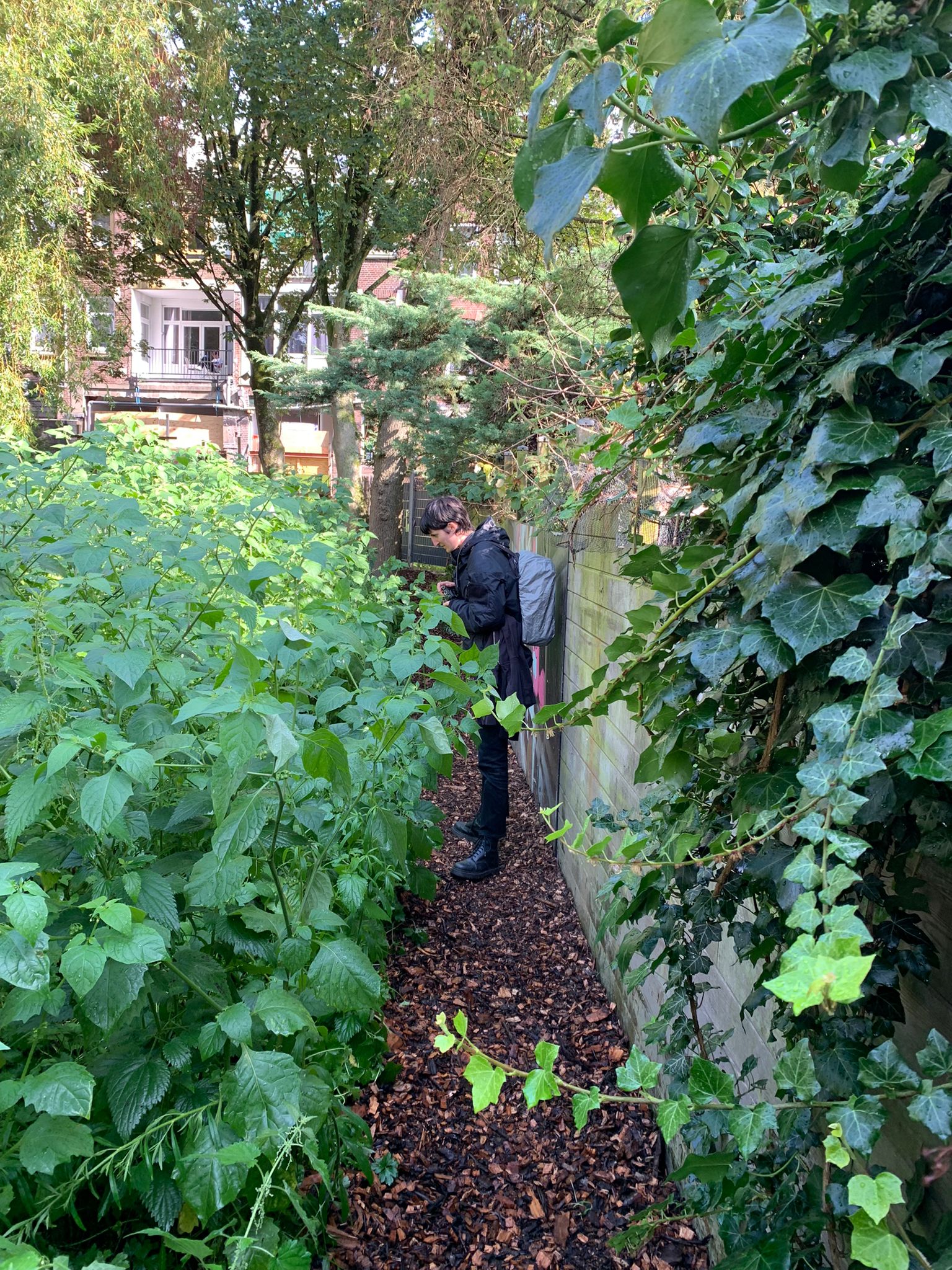
We started to notice that the nightshade growing on the left side of the garden were beginning to really take over - forming a bit of a monoculture which was limiting other plant species from growing and establishing. As part of the communal working day we decided to make some choices with the nightshade, removing some of them to open up the bed, and enable the opportunity for others to grow with less competition. 

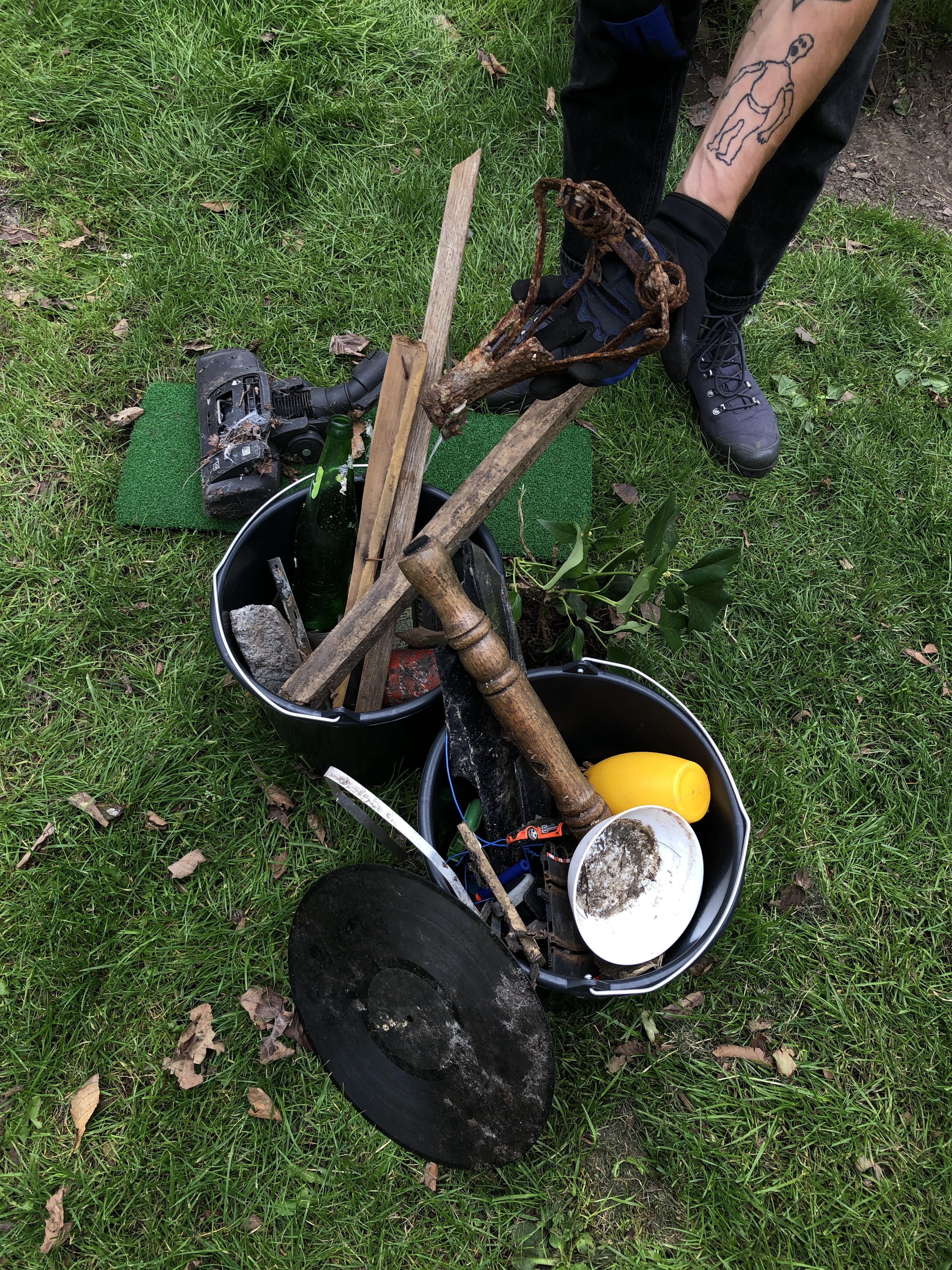
To begin we started with a rubbish collection moment, finding a multitude of things - a mattress, water hose end, beer cans, pokemon card, even Santa! Again we kept some of the pieces that we could re-use in the future or just took our fancy for whatever reason, though others we relocated to the nearby bin. It's interesting to see each time what objects have moved into this section of the park, it seems to be a huge range, and we question each time what things we decide to remove, what to keep, and in both circumstances why? It's been clear that the private and secretive corner of this garden could easily be used as a sleeping spot, or a hangout point for beers, this leafy green space offering a supportive cocoon to those that seek it. When we remove these pieces of residue, we also remove traces of the ability to use the garden in these ways, but what ways can we try to allow room for them to exist alongside other activities in there, such as a space for adventures for children for example. These are questions we are pondering, for now we removed the cans and sharp objects, the microplastic that are not so nice to leave for the soil, the cigarette butts too. And the mattress that is tossed barely in the garden is moved too, but perhaps it will come back if it was eagerly enjoyed. Let's see.

But back to the nightshades... once our rubbish moving was done we drew our attention to these plants - 

Black nightshade - Zwarte nachtschade - solanum nigrum

In the nightshade family, so related to tomatoes, potatoes and aubergines, all parts of the plant except for fully ripe berries are toxic. Native to Europe, it is now defined as a weed in other countries such as Australia due to its prolific growing habits. An annual or sometimes short lived perennial, it can reach up to 120cm tall, with a 60cm width, growing often with large flat leaves that form heart or toothed edges, their flowers are generally white with a yellow center surrounded by five petals, and they form berries that change to black when ripe (one cultivar in India produces red berries). Ingesting the raw leaves or unriped fruit has been known to result in solanine poisoning (which causes gastrointestinal and neurological reactions), though many varieties exist that have been used as food sources and medicinally for people all over the world.

For more info: https://en.wikipedia.org/wiki/Solanum_nigrum

As we did not know specifically what cultivar of black nightshade it was, we were careful when handling it just in case. But it would be great to work out if this type is edible at all.

We tried our best to disturb the soil and surrounding species as little as possible, lifting the plants up with trowels. We decided to only remove what we felt was necessary to provide more room for the other plant species to have more opportunity to establish and flourish, keeping a more balanced diversity in the garden. It was difficult to decide exactly when to stop, when there was enough room, and enough nightshade to also let this species flourish. Through talking and checking in with each other we eventually came to a decision on when to put tools down! The plant species in this section of the garden are mostly plants that have germinated by themselves - seeds sprouting that were already in the soil previously, perhaps blew in somehow, or was sown by someone, human or otherwise. There are also a small amount of plants there that were planted by Rotterdam Gemeente, such as English Ivy. 

We are curious to see how the plants now grow alongside each other with this extra room, particularly as the weather begins to shift from Summer towards Autumn, bringing more rain, stormy conditions and a cooler temperature. 

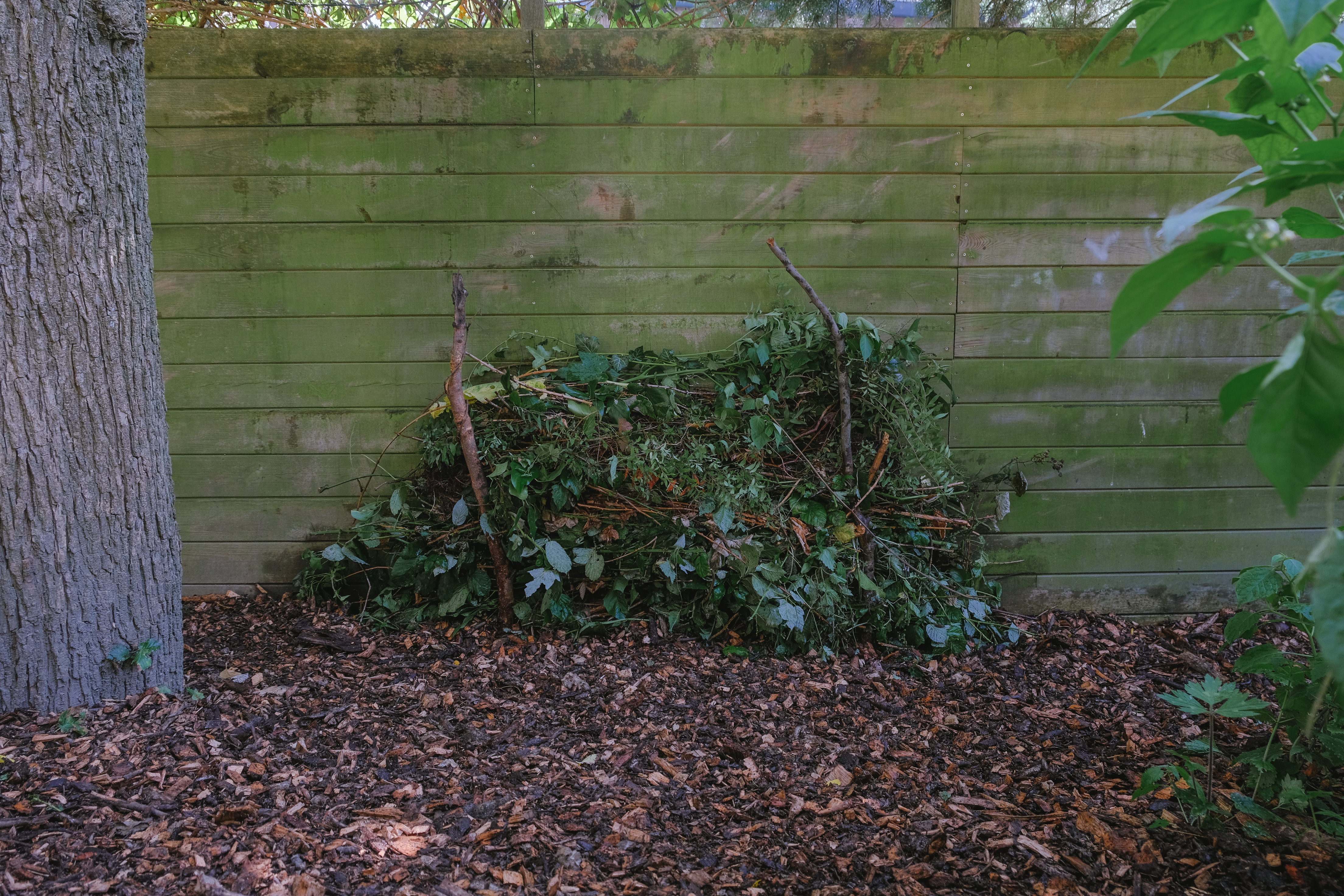
We placed the plant material into the already existing takkenrillen around the garden before then tucking into a nice lunch in the shade! :)

Here are some photos of the day, from Kate and Silvia >>>


a thistle in amongst the nightshades

but first we need to remove a mattress!

found Santa...

now a spiders home
critters of the garden


finding ways to as carefully and considerately pull up some of the nightshade - with a trowel we wiggled each plant out, trying to limit the impact to the soil and surrounding plants


we encountered lots of worms along the way!


Silvia was cutting the uprooted plants into smaller pieces ready for adding them into our takkenrillen
lots and lots of fruits from the nightshades on the ground afterwards...lots of seeds!


a competition was developed - who found the biggest nightshade!


making space for other species to establish


our souvenirs for the day


Monday, August 28, 2023

some fragments about lead in soil + getting to know the plant species by the playing area of the park (17/08/2023)

 from 'How lead can get into your soil' by the Center for Environmental Health (https://ceh.org/yourhealth/test-your-soil-for-lead/)

<<Lead can occur in soil naturally around a rate between 10-50 mg/kg, but because of past reliance on leaded products, contaminated sites may have lead levels anywhere from 150 mg/kg to 10,000 mg/kg. Although the widespread use of lead had been phased out over the years, lead does not break down over time so it’s still the most common type of soil contaminant in urban areas.

The main ways lead can contaminate your soil is through lead paint or leaded gasoline. Until the 1970s, lead paint was commonplace indoors and outdoors in both residents and commercial properties. It was basically everywhere! As paint ages, it can flake off and leave behind tiny debris that can integrate into soil. Car exhaust from leaded gasoline could have also contaminated soil with lead, especially if the soil was located next to a particularly busy road (2). Even though lead gasoline was phased out in the 1980s, lead can still be present in the soil.

While lead does not bioaccumulate in plants, it does hold very tightly onto clay or organic matter and, unless disturbed, is found in the top 1-2 inches of soil (2). This means that produce that grows lower to the ground, like root vegetables or leafy greens, might be covered in lead-contaminated soil.>>

<<Any result that shows lead above 150 mg/kg means you have high levels of lead in your soil and you should take action before planting and new plants.>>

-------------------------------------------------------------------------------------------------------------------------


Getting to know species in shared grounds garden. Species found at the green strip adjacent to the children’s play area:

  • Sycamore

  • Siberian Elm (can grow on polluted soils)

  • Common sowthistle

  • Stinging nettle

  • Common dandelion

  • Common plantain (cat: cua de rata)

  • Creeping buttercup (cat: botó d’or)

  • Ribwort, lamb’s tongue (cat: herba de cinc-nervis) (seeds are critical food sources for songbirds)

  • Persian Ivy (planted by the Gemeente Rotterdam)

  • Horseweed

  • English ivy

  • False spiraea

  • Pale smartweed

  • Black nightshade

  • Fool’s parsley (toxic, in picturethis it appears as not reported in Europe)

  • Coltsfoot (native to Europe, <<the flowers and leaves of coltsfoot have long been used to treat all kinds of respiratory disorders, but its use to prevent coughs and soothe the throat is well documented [...] Coltsfoot has also been used to treat diarrhea, to purify the blood, to stimulate metabolism, to cause diuresis and sweating, and topically as a wound treatment [...] Coltsfoot has been served cooked; raw in salads; fried in batter; to make beer, wine, and candy>> (From ‘Coltsfoot’ by Amanda Dailey and Melanie Johns Cupp.

  • Bitter dock (invasive, used in medieval folk medicine, roots can be used to make yellow-dye)

  • Pigweed

  • Tarragon?

  • Red elderberry

  • American black nightshade

  • Elder

  • Wild garlic?


Sunday, August 27, 2023

Working Day 2! ~ 27/8/2023 ~ more mulch!

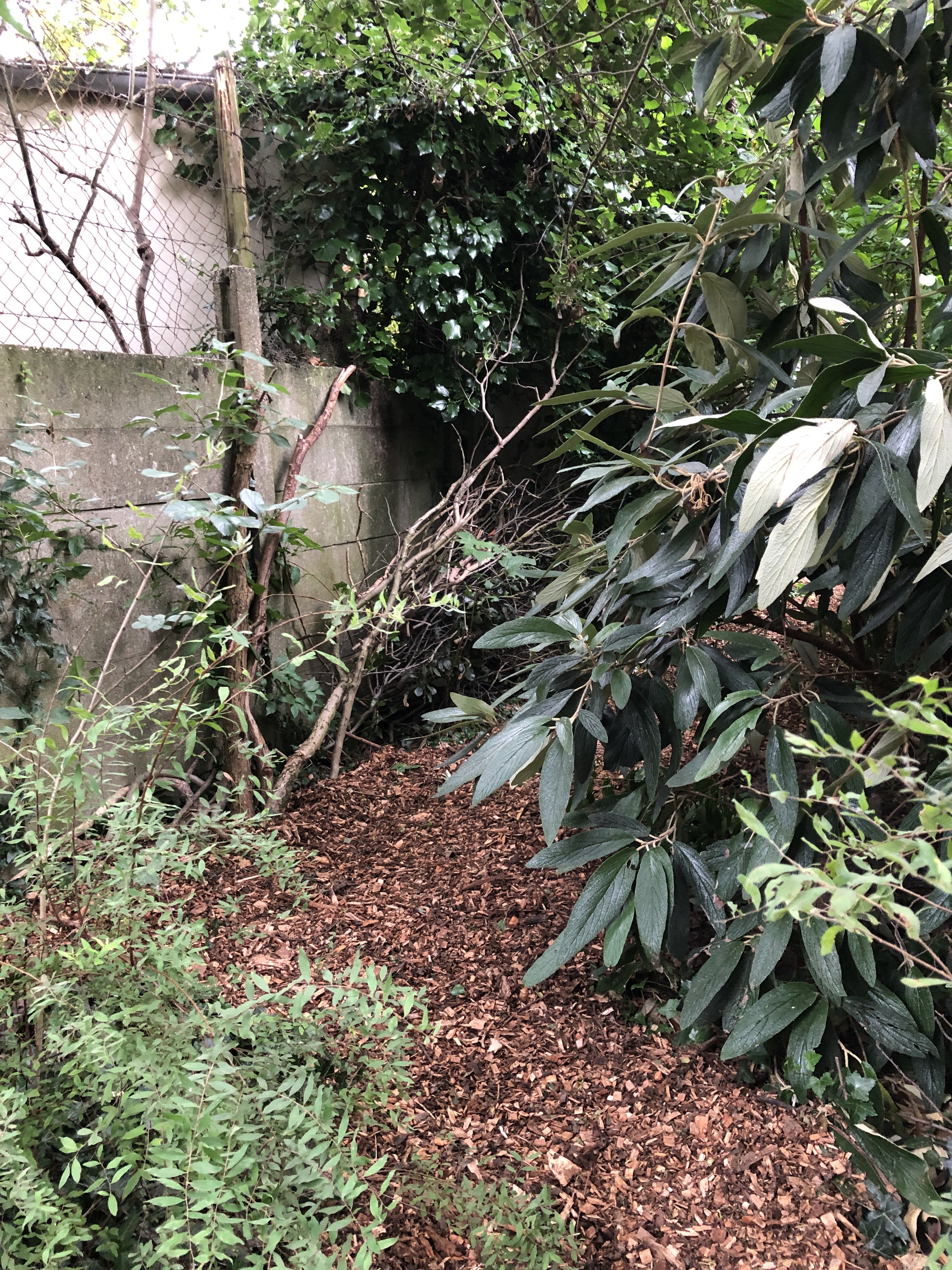
Our second communal working day was met with intermingling rain and sunshine! Within the session we decided to lay down some extra mulch to make a more open pathway behind the bed on the left side of the garden, and in front of our neighbour's fence. We clipped back some of the overhanging blackberry too to aid in this. 

We've already noticed a lot of spiders moving into the garden, and they seem to be enjoying the opportunity to spread their webs over this more open section of the garden!

Prunings and organic materials that we took from the garden were formed into another 'takkenril' or in English 'dry hedge', in which lengths of branches and green matter are interwoven between supportive sturdier wooden beams to make a hedge that can be a great safe haven for different species including insects and small animals, whilst also enabling us to keep our clippings onsite to compost over time to the benefit of the surrounding ecosystem.

Guillem prepared a super delicious lunch for after all the hard work in gratitude! - thanks to all who joined!

Here are some pics take by Guillem and Silvia >>>


moving moving!
safety from the rain!


some prunings adding up...


yummo!


the new takkenril


Tuesday, August 15, 2023

15/08/2023


In our first collective working day we experienced what
or how much a pile is  We did so by distributing 25 cubic meters
of mulch that were delivered by the Gemeente Rotterdam, to mark the
walking path through the garden. One pile of mulch, two wheel barrows,
two shovels, one fork, many hands, lunch, water and time.

A green path/tunnel in Charlois.


soil samples from the garden at the back terrace of Rib


About trying to get the soil of the garden tested to check levels of lead...


Notes after call with soil testing laboratory Alcontrol Laboratories:


  • Soil samples have to be delivered to their lab

  • They work with soil testing company Van der Helm

  • They do not generate a report, they just deliver the results of 

    the analysis


Notes after call with soil testing company Van der Helm:


  • They work with the municipality of Delft

  • The process they work with is the following: 1) Client defines 

    border fo the area to be tested 2) They make an offer in regards

    to the surface of the area 3) They take soil samples on location 

    (they make 2 m deep and 10-12 cm wide holes on the ground) 

    4) They send the samples to Alcontrol Laboratories for analysis 

    5) They make a report with the results from the analysis.

  • An estimation of 3.000€ to get the garden tested. Working with 

    Van der Helm is out of the question.


Friday, August 11, 2023

First working day shenanigans! ~ 11/8/2023 ~ rubbish collecting/gleaning/chucking, pruning to open up the path & shifting mulch


pruning time!

plants found!

lots of rubbish hiding under the growth

spiders making homes from trash <3


collected goods


our mulch pile delivered for free from the gemeente


the things you find...


time to move the mulch!


all gone!

out to the trash can!


the results from a big day of work - new mulch tracks, pruned back shrubs to allow easier access through the garden, and removed rubbish :)


the path weaves all the way through the garden now :)